Full Stack Precision
The Evolution of Modern Web Development: Scaling Beyond the Monolith
In the early days of web development, building an application was straightforward: you wrote your code, connected it to a database, and hosted it on a single server. But as user expectations for speed and reliability have soared, the way we build the web has fundamentally changed. We are no longer just "writing code"; we are orchestrating systems.
1. The Move Toward Decoupled Architectures
The traditional "Monolith" (where the frontend and backend are tightly coupled) is giving way to decoupled architectures. By separating the UI from the server logic using APIs, developers gain immense flexibility. This allows a Python Django backend to serve data not just to a web frontend, but also to mobile apps and third-party integrations simultaneously.
2. The Power of Containerization (Docker)
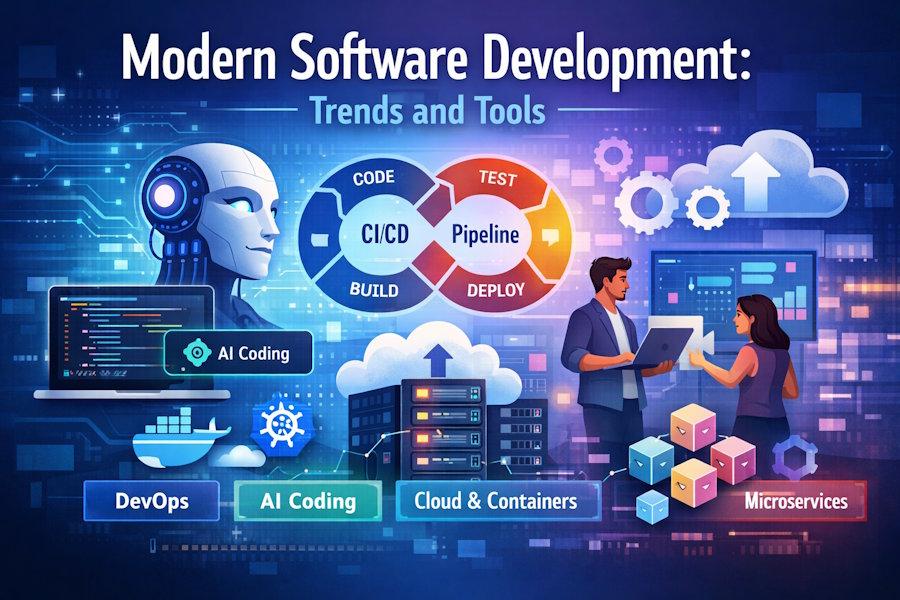
One of the biggest "pain points" in web development used to be the phrase: "It works on my machine!" Containerization tools like Docker have solved this by packaging the application with all its dependencies into a single unit.
Consistency: The environment is identical from the developer’s laptop to the production server.
Efficiency: Containers allow developers to spin up complex environments—including databases, caches, and web servers—in seconds.
3. Full Stack Security: A Non-Negotiable Layer
As a Full Stack Web Developer, security is no longer a separate task—it is integrated into every layer of the stack. Modern development involves protecting against sophisticated threats like:
Insecure Deserialization: Preventing attackers from injecting malicious objects into the application logic.
Broken Access Control: Ensuring that a user can only access the data they are strictly authorized to see.
Automated Scanning: Using CI/CD pipelines to catch vulnerabilities in code and dependencies before they ever go live.
4. The "Glassmorphism" and UI/UX Revolution
On the frontend, the focus has shifted toward high-performance, aesthetically pleasing designs. Trends like Glassmorphism (using transparency and background blurs) and "Cyber-Tech" aesthetics aren't just about looks—they represent a move toward professional, clean, and intuitive user interfaces that reflect the sophistication of the underlying tech.
Conclusion
Web development in 2026 is an intersection of clean code, robust infrastructure, and proactive security. Whether you are optimizing a database in the backend or perfecting a responsive layout in the frontend, the goal remains the same: building digital experiences that are as resilient as they are beautiful.


التعليقات (0)
كن أول من يترك تعليقاً.
اترك تعليقاً