The Velocity Engine
Beyond the Pipeline: The Cultural Core of Modern DevOps
For a long time, software development and IT operations lived in two different worlds. Developers wanted to push new features as fast as possible, while operations teams prioritized stability, often leading to a "wall of confusion" between them. DevOps isn't just a set of tools designed to tear down this wall; it is a fundamental shift in how we perceive the lifecycle of a digital product.
1. Infrastructure as Code (IaC)
One of the most revolutionary aspects of DevOps is treating infrastructure the same way we treat application code. Instead of manually configuring servers, we use code to define and manage our environments.
Version Control: Infrastructure changes are tracked, reviewed, and versioned.
Repeatability: You can tear down and rebuild an entire environment in minutes, ensuring that "Production" is an exact mirror of "Development".
2. The Heartbeat of Delivery: CI/CD
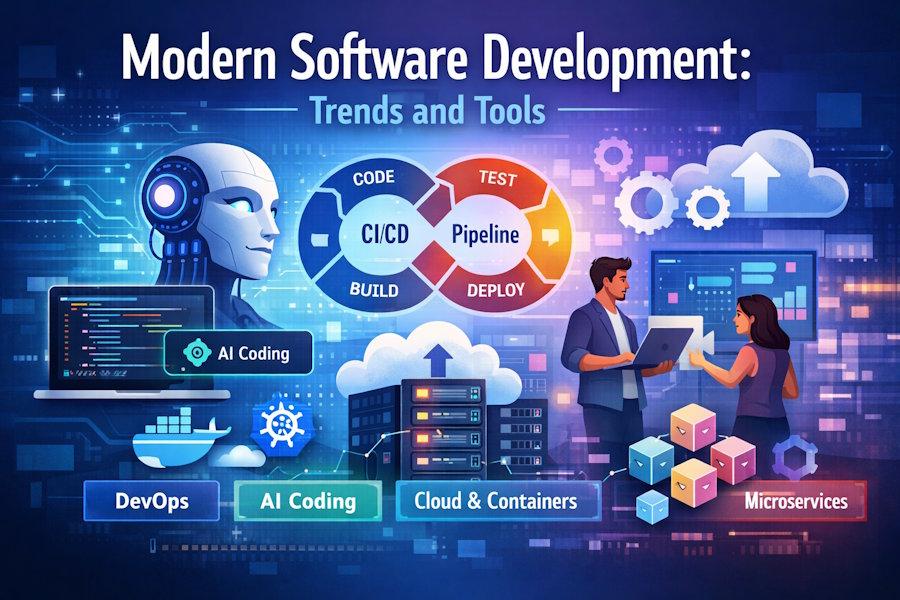
The Continuous Integration and Continuous Deployment (CI/CD) pipeline is the engine of DevOps. It automates the transition from a developer’s local machine to the live server.
Early Detection: Automated testing at every stage catches bugs and security flaws before they reach the user.
Seamless Deployment: Tools like GitLab CI/CD allow for frequent, low-risk releases, meaning new features can go live multiple times a day without downtime.
3. Scaling with Confidence: Docker and Orchestration
In a modern DevOps workflow, applications are rarely deployed directly onto a server. Instead, they are wrapped in Docker containers.
Portability: Containers ensure the app runs the same way regardless of the underlying hardware.
Scalability: With orchestration tools like Docker Swarm, systems can automatically scale up to handle traffic spikes and heal themselves if a container fails.
4. Security as a Standard (DevSecOps)
The modern approach is moving toward DevSecOps, where security is integrated directly into the pipeline. By automating security scans for dependencies and configurations, teams ensure that speed never comes at the cost of safety.
Conclusion
DevOps is more than just "automation"—it is a culture of shared responsibility. When developers and operations teams use the same tools, speak the same language, and share the same goals, the result is a faster, more resilient, and more innovative organization. In 2026, the question isn't whether you should adopt DevOps, but how quickly you can master its evolution.


Comments (0)
Be the first to leave a comment.
Leave a Comment