Beyond the 404
The Strategic Power of the 404 Page
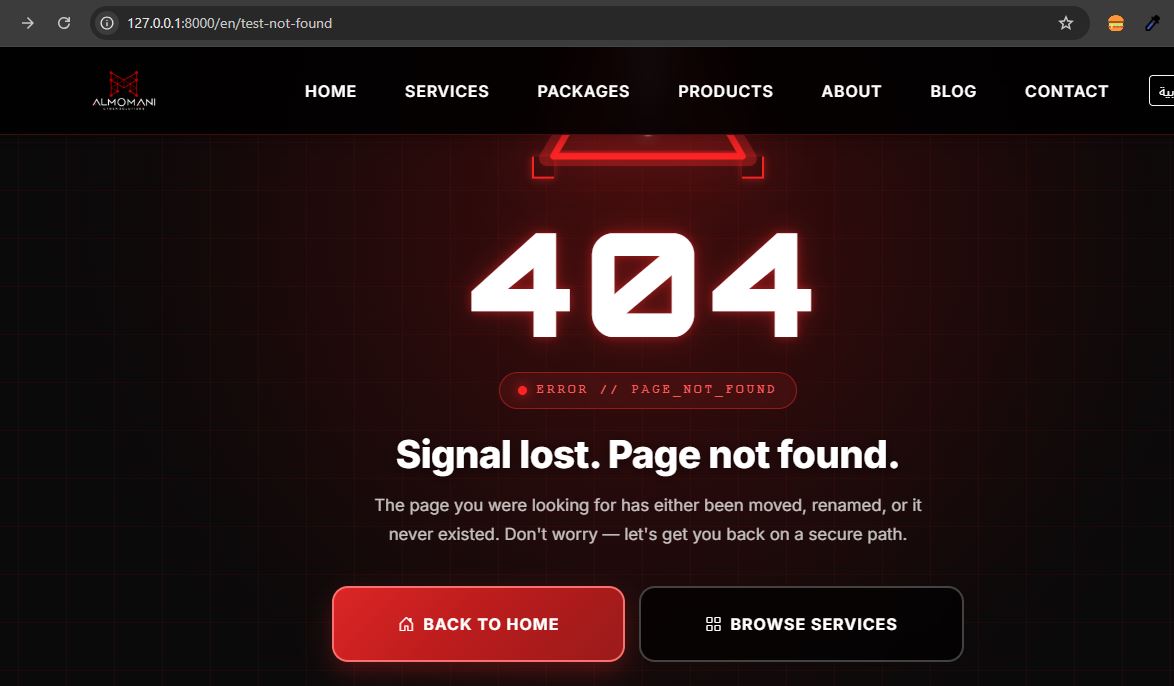
In the world of web development, a 404 error is often seen as a minor failure—a broken link or a missing resource. However, for a professional platform, this page is far more than just a notification of a missing file; it is a critical touchpoint for user experience (UX) and brand trust. A well-crafted 404 page transforms a potentially frustrating "dead end" into a helpful guide, ensuring that users remain engaged with the site while maintaining the high standards of a polished, modern digital environment.
1. Enhancing User Retention
When a user clicks a broken link, they experience a "dead end." A generic, technical 404 error often leads to frustration and immediate site abandonment. However, a custom-designed 404 page acts as a safety net. By providing clear navigation, a search bar, or links back to the homepage, you keep the user within your ecosystem instead of losing them to a competitor.
2. Strengthening SEO (Search Engine Optimization)
From an SEO perspective, "broken links" are inevitable as websites evolve. While Google doesn't penalize a site just for having a 404 page, it does care about the user journey. A well-structured 404 page helps search engine crawlers understand the site hierarchy and ensures that "link juice" is redirected properly through internal links, maintaining the site's overall authority.
3. Brand Personality and Professionalism
A custom 404 page is an opportunity to showcase brand identity. For tech-forward companies, using modern design styles—like the Glassmorphism or Cyber-Tech aesthetics—converts a technical failure into a polished brand moment. It signals to the user that every detail of the platform, even the errors, is managed with high professional standards.
4. Error Tracking and Analytics
Smart 404 pages serve a functional purpose: they help developers identify issues. By monitoring 404 hits in analytics, you can find out which specific URLs are broken and fix them (e.g., via 301 redirects), ensuring the full development lifecycle remains optimized.
Key Elements of a Successful 404 Page:
Clear Messaging: Explain what happened without using scary technical jargon.
Call to Action (CTA): A prominent "Back to Home" button.
Search Functionality: Let users find what they were looking for.
Visual Consistency: The design should match the rest of the site's professional vibe.



Comments (1)
Informative article! The 404 page is truly a hidden opportunity for better user retention and error tracking. Thanks for sharing these professional tips.
Leave a Comment